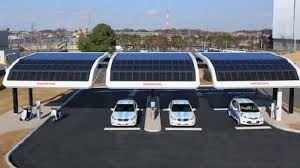
Picture this — you pull into your driveway after a long day, plug in your electric car, and as it charges silently, the sun (yes, that same sun that powered your fan all day) keeps the meter from spinning. No guilt, no grid, just clean energy looping through your home and vehicle. That’s not a sci-fi fantasy anymore — it’s the next big leap for India’s green homes.
As EV adoption surges and rooftop solar becomes mainstream, the idea of powering your car with your own rooftop sun is catching on — and for good reason. It’s cost-effective, energy-efficient, and, honestly, it just feels right. But how do you make that integration actually work?
Let’s break it down — step by step, story-style, with a bit of tech sprinkled in.
The Big Idea: Why Pair Solar with EV Charging
Here’s the thing — electric vehicles are only as clean as the electricity they use. If you’re charging from a coal-powered grid, you’re just shifting emissions from your tailpipe to a smokestack somewhere else. Rooftop solar flips that equation — your car runs on sunshine.
Plus, with rising electricity tariffs and unpredictable fuel prices, it makes financial sense. An EV might cost ₹1 per km on solar power, compared to ₹8–10 on petrol. You save, the planet breathes easier, and your ROI on the solar system improves dramatically.
In cities like Bengaluru, Pune, and Hyderabad, homeowners are already experimenting with hybrid solar setups that power homes by day and charge EVs by night — seamlessly switching between solar, grid, and battery depending on availability.
Step 1: Assess Your Solar Potential
Before installing anything, you need to answer one question — how much sunshine can your roof actually harness?
Solar output depends on three main factors:
- Roof orientation and tilt — South-facing roofs catch the most sunlight.
- Shadow-free area — Nearby trees or buildings can block sunlight.
- Local climate — More sun hours = more energy.
For example, in Hyderabad, you get around 5.5–6 hours of usable sunlight daily, which means a 5 kW system can generate roughly 20–24 kWh/day — easily enough to run a household and charge an EV overnight.
A good installer will analyze your roof using solar mapping tools or drone scans to determine the best layout. Many solar companies — like Tata Power Solar, Loom Solar, and ZunRoof — offer this as part of their site survey.
Step 2: Choose the Right Solar System Setup
Now comes the slightly geeky part — but don’t worry, we’ll keep it simple.
You’ve got three main configurations to choose from:
- On-Grid Solar System – Connected to the grid; any excess power goes back to DISCOM via net metering. Perfect if your EV charging is mostly during the day.
- Off-Grid Solar System – Runs entirely on solar and battery storage. Ideal for remote or grid-unstable areas.
- Hybrid Solar System – Combines both. You store energy in batteries, sell surplus to the grid, and have power even during outages.
For EV integration, hybrid systems are the sweet spot. They ensure your car can charge even when the grid’s down — and let’s face it, blackouts do still happen.
If your EV supports smart charging, you can even schedule charging for when your solar generation is highest, maximizing self-consumption.
Step 3: Select an EV Charger Compatible with Solar
This part often gets overlooked, but it’s crucial. Not all EV chargers can communicate with solar systems.
Look for a solar-aware charger — one that detects surplus solar energy and prioritizes charging your EV before exporting excess to the grid.
A few great examples available in India:
- Tata Power EZ Charge Home
- Sungrow iSolarCloud EV Charger
- Delta AC Max
- Waaree Energies Smart EV Charger
These can sync with your solar inverter and app dashboard, showing real-time energy flow — so you know exactly when your car is “drinking sunshine.”
Pro tip? If your inverter supports OCPP (Open Charge Point Protocol), integration becomes even smoother — allowing your charger, inverter, and EV to “talk” to each other through smart software.
Step 4: Factor in Battery Storage (Optional but Game-Changing)
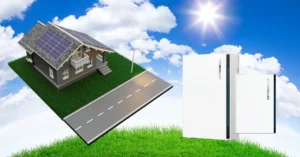
Here’s where it gets exciting. Pairing solar with a battery storage system means you can charge your EV even after sunset — without touching the grid.
Think of it as having a mini fuel station at home that refills itself every morning.
A 5–10 kWh lithium-ion battery, depending on your usage, can store enough energy to charge a compact EV like a Tata Nexon EV for 40–50 km daily.
Yes, it adds to the upfront cost, but with prices of lithium batteries steadily dropping and financing options improving, it’s a solid long-term investment.
Step 5: Financing, Subsidies & Smart Savings
The good news? Both solar and EV sectors are heavily incentivized in India right now.
Here’s what to check:
- PM Surya Ghar Muft Bijli Yojana – Offers up to 40% subsidy on rooftop solar systems.
- State EV Policies – Some states provide rebates on home charger installation.
- Bank Loans & EMIs – Lenders like HDFC Bank, SBI Green Loan, and Tata Capital now have dedicated solar+EV finance schemes.
On average, the combined cost of a 5 kW solar system + EV charger can range from ₹4–6 lakh, but EMIs can bring it down to ₹6,000–₹8,000/month — roughly the same as your fuel bill, but you’re owning an asset, not burning petrol.
Step 6: Smart Integration & Monitoring
The good news? Both solar and EV sectors are heavily incentivized in India right now.
Here’s what to check:
- PM Surya Ghar Muft Bijli Yojana – Offers up to 40% subsidy on rooftop solar systems.
- State EV Policies – Some states provide rebates on home charger installation.
- Bank Loans & EMIs – Lenders like HDFC Bank, SBI Green Loan, and Tata Capital now have dedicated solar+EV finance schemes.
On average, the combined cost of a 5 kW solar system + EV charger can range from ₹4–6 lakh, but EMIs can bring it down to ₹6,000–₹8,000/month — roughly the same as your fuel bill, but you’re owning an asset, not burning petrol.
Beyond the Home: The Rise of Vehicle-to-Home (V2H)
Here’s the future — and it’s thrilling.
Soon, your EV won’t just consume power; it’ll supply it. The Vehicle-to-Home (V2H) concept allows your EV battery to power your house during outages or peak tariffs.
Japan has been pioneering this for years, and Indian automakers like Tata Motors and Mahindra are exploring similar features for next-gen EVs.
Imagine using your car’s stored solar energy to keep the lights on during a power cut — that’s energy circularity in action.
Challenges & How to Tackle Them
Of course, no setup is perfect. A few challenges remain:
- Compatibility issues between solar inverters and EV chargers.
- Limited awareness among local installers about integrated systems.
- High initial cost for hybrid setups.
But the ecosystem is evolving fast. With MNRE’s focus on smart grids and increasing private investment, integration will only get simpler (and cheaper).
For now, working with experienced solar EPC companies that specialize in hybrid installations — like Servotech, Amplus Solar, or Fenice Energy — ensures you get it right the first time.
Final Thoughts: The Road (and Roof) Ahead
Here’s what it boils down to — pairing rooftop solar with an EV charger isn’t just about tech or savings; it’s about independence.
You’re creating a self-sustaining energy loop that powers your home, your commute, and your conscience. Every sunrise fills your “tank,” every drive leaves the air a little cleaner.
And honestly, that’s the kind of innovation that defines a modern Indian household — practical, forward-thinking, and deeply connected to its environment.
Because the future of mobility doesn’t stop at your driveway — it starts on your rooftop.