The Industrial Power Dilemma
If you run an industrial business in India, you already know the pain points — rising electricity tariffs, unreliable grids, and the constant pressure to stay sustainable.
Energy costs don’t just eat into profits; they dictate how competitive you can be.
That’s why more industries are shifting toward industrial solar energy — a cleaner, smarter, and more predictable alternative that’s rewriting the rules of power management.
Solar Power: The New Industrial Currency
Think of solar energy not just as a fuel source, but as financial protection. Every unit of electricity you generate from sunlight is one less you buy from the grid.
That’s not theory — it’s math.
Industrial units that switch to solar typically save 30–60% on their annual energy bills. Over a decade, that’s crores saved — money that can go right back into growth, machinery, or manpower.
And unlike traditional energy sources, solar isn’t subject to the whims of global oil prices or utility rate hikes. The sun doesn’t send an invoice.
Why Industrial Solar Energy Makes So Much Sense in India
India’s solar story is nothing short of remarkable. With over 70 GW of installed capacity and abundant sunshine across most states, industries here sit at a huge advantage.
Add to that government initiatives like:
- Accelerated Depreciation (40%) — quick return on investment
- Net Metering — get credit for excess power sent to the grid
- Subsidized loans and capital support in some states
When policy meets technology, adoption becomes inevitable.
Industrial Solar Systems — Built for Scale, Engineered for Impact
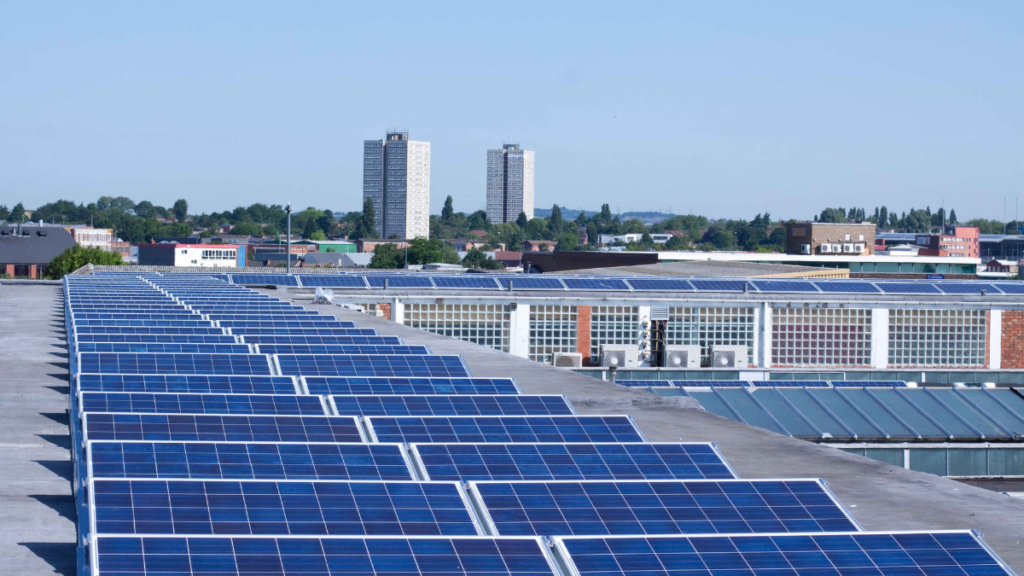
Industrial setups aren’t small consumers. Their energy needs are massive and continuous.
That’s why industrial solar energy systems are designed differently from residential ones — they’re larger, smarter, and more robust.
Altisun Solar specializes in custom-engineered systems that align with a business’s load profile, operation hours, and site conditions. Whether you’re running a textile mill, a food processing plant, or a logistics warehouse — we design systems that power it efficiently, day after day.
And yes, we integrate AI-based monitoring dashboards, so you can literally see your savings live.
Breaking the Myth: “Solar Can’t Power Heavy Industry”
This one comes up often. “Can solar really handle industrial loads?”
The answer — absolutely, yes.
Modern industrial solar plants can handle everything from compressors to conveyors, even heavy-duty motors.
With hybrid configurations and storage solutions, solar can run side-by-side with grid power, ensuring reliability 24/7.
And the tech is only getting better — high-efficiency bifacial panels, smarter inverters, and longer warranties mean today’s solar systems are leaner, cleaner, and tougher than ever before.
Environmental Impact — A Bonus with Benefits
Every megawatt-hour of solar electricity replaces roughly 700 kg of CO₂ emissions.
Multiply that across hundreds of industries, and you’re looking at a cleaner sky, healthier communities, and lower national emissions.
But it’s not just good karma — sustainability now drives real business outcomes.
Investors, partners, and global buyers prefer eco-conscious suppliers.
In other words, clean energy is becoming a prerequisite for global relevance.
Altisun Solar: Engineering Energy Independence
At Altisun Solar, we don’t sell panels — we deliver peace of mind.
Our industrial solar energy solutions are built around your operations, not the other way around.
We handle every stage — from energy audit and design to installation, monitoring, and maintenance — so your transition to solar is effortless.
We use Tier-1 panels, high-performance inverters, and precision mounting structures tested for India’s climate extremes.
Our clients across India — from Coimbatore to Ahmedabad — are already running solar-driven operations that save lakhs every month.
A Smart Investment with Predictable Returns
Let’s talk ROI — the number that matters most.
Industrial solar energy projects usually break even in 3–5 years, with guaranteed generation for 25+ years.
That’s two decades of nearly free electricity, while utility prices keep rising.
It’s not a gamble. It’s a calculated win.
And since solar assets qualify for accelerated depreciation, the financial benefits start from year one.
Future-Proofing Your Industry
Global trade is moving toward sustainability mandates. From carbon disclosures to ESG ratings, clean energy use will soon be a competitive factor.
Switching to solar now doesn’t just save money — it future-proofs your brand, your operations, and your bottom line.
In a decade, businesses that didn’t make the switch will likely spend more, compete less, and struggle with compliance.
So the question isn’t “Should we go solar?” — it’s “How soon can we?”